Ratio and Proportion organisers
Every method in the unit, with a worked example for each.
- Ratio, proportion, percentages and compound measures
- Higher: algebraic proportion and rates of change
- Small-steps checklists and common mistakes
TopBand › Maths
MathsPrep · GCSE Maths · Pearson Edexcel 1MA1 · Grades 9–1Clear methods, worked examples and plenty of practice for Edexcel GCSE Maths, Foundation and Higher. Every answer in every resource is checked by computer, so the solutions never disagree with the arithmetic.
Ratio, algebra, number, and geometry and measures: a new question every time, Foundation or Higher. Type your answer, check it, and see the full method. No sign-up, and nothing is saved.
Loading…
Four fresh questions in seconds: one from geometry, one from number and algebra, one from ratio, plus a stretch. Try them without notes, then reveal the answers. Teachers: put it on the board as a lesson starter.
From rockets and bridges to sunflowers and honeycombs, the maths in our units is everywhere.
1969
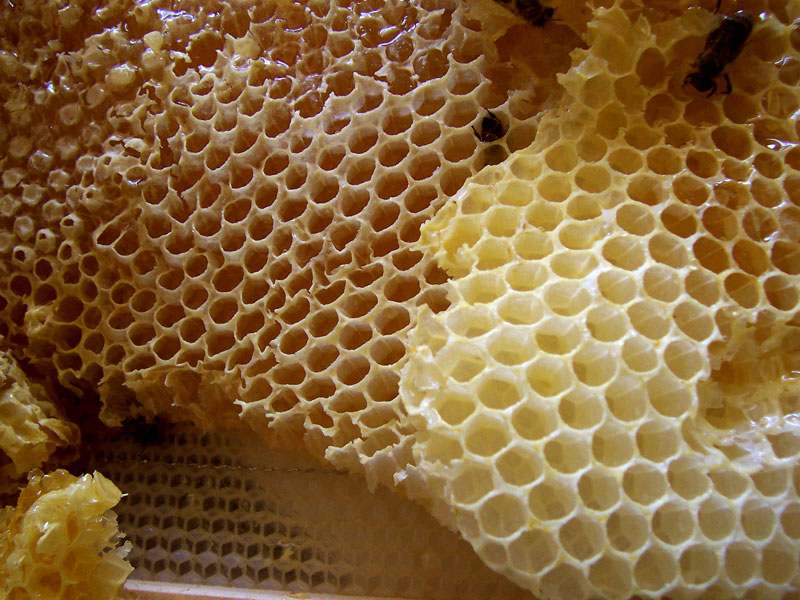
FranceImage credits for this page, via Wikimedia Commons: Apollo 11 launch (1969), NASA, Public domain; Creissels and the Millau Viaduct by Stefan Krause, CC BY-SA 3.0; Sunflower Spiral by Clay Junell, CC BY-SA 2.0; Romanesco broccoli by Jon Sullivan, Public domain; Honeycomb by Merdal, CC BY-SA 3.0; Great Pyramid of Giza by Nina Aldin Thune, CC BY 2.5. Images resized and cropped.
Ten quick-fire GCSE Maths starter facts. Pick a topic or mix them all, type the missing word from memory and see your score. Small spelling slips are allowed.
Foundation tier covers grades 1 to 5 and Higher tier covers grades 4 to 9. Every paper can test any topic. Number is 22–28% of the marks at Foundation and 12–18% at Higher; ratio, proportion and rates of change is 22–28% and 17–23%; algebra is 17–23% and 27–33%.
Ratio and sharing, best buys and exchange rates, direct and inverse proportion, percentages and compound interest, and speed, density and pressure. Higher students also get algebraic proportion and rates of change.
Every method in the unit, with a worked example for each.
How the papers are marked, then 20 exam-style questions.
Ten five-minute starters that mix this unit with earlier skills.
Nature
NatureSimplifying, expanding and factorising, the laws of indices, equations and inequalities, formulae and sequences. Higher students also get quadratics, simultaneous equations, algebraic fractions and proof.
Every method in the unit, with a worked example for each.
How the papers are marked, then 22 exam-style questions.
Ten five-minute starters that mix algebra with earlier skills.
Primes, HCF and LCM, fractions and recurring decimals, standard form, rounding, estimation and error intervals. Higher students also get surds, fractional indices and upper and lower bounds.
Every method in the unit, with a worked example for each.
How the papers are marked, then 23 exam-style questions.
Ten five-minute starters that mix number with earlier skills.
Nature
EgyptAngle facts and bearings, area and volume, circles, Pythagoras, trigonometry, transformations and vectors. Higher students also get sectors, cones and spheres, the sine and cosine rules, and similar areas and volumes.
Every method in the unit, with a worked example for each.
How the papers are marked, then 22 exam-style questions.
Ten five-minute starters that mix geometry with earlier skills.
Quick games to test yourself: 4 free Maths games. Tap one to play.
Preview each resource first. Each is a one-off purchase you download and keep.
Prices include any VAT. Each file is for one student’s personal use. Teachers: ask about a department licence using the enquiry form.
One-to-one tuition online, or request the next topic you need.
Content follows the Pearson Edexcel GCSE Mathematics (1MA1) specification. Always check the current specification. Not produced or endorsed by Pearson.